
Request A Quote
Industry Insights & Apparel News

Apparel & Fashion Manufacturing Blog

Stay updated with the latest fashion trends, private label manufacturing guides, and wholesale clothing business strategies.

0%

Choosing the right supplier is difficult when every website promises premium quality, fast delivery, and flexible minimum orders. The reality often feels less polished. A jacket may look excellent in a digital catalog, yet arrive with uneven ribbing, weak snaps, or embroidery that loses definition after washing.

James McArthur, a veteran private-label apparel sourcing consultant, observes, “A varsity jacket can look impressive in a photograph and fail on the first cold morning.” That warning matters. Reliable Private Label Varsity Jackets suppliers should explain their wool blend, leather or vegan-leather specifications, fabric weight, lining, stitching density, and testing process. They should also provide physical samples before large production begins.

This 2026 guide examines leading suppliers worldwide through practical buyer criteria. These include customization capability, minimum order quantities, sample accuracy, production timelines, communication, factory transparency, and quality-control procedures. A supplier with a low price is not automatically the best choice. Sometimes, it is the most expensive mistake.

Look closely at the details. Check the collar recovery. Test the snap buttons. Inspect the inside seams. Compare the approved sample with the bulk shipment. Ask whether recycled fibers, responsible wool, or traceable materials are available. Certifications can help, but they do not replace independent inspection.

There is no perfect supplier for every brand. A startup may need low MOQs and patient guidance. An established retailer may prioritize capacity, consistency, and global logistics. This list aims to make that comparison clearer, while recognizing one uncomfortable truth: supplier claims still require verification.
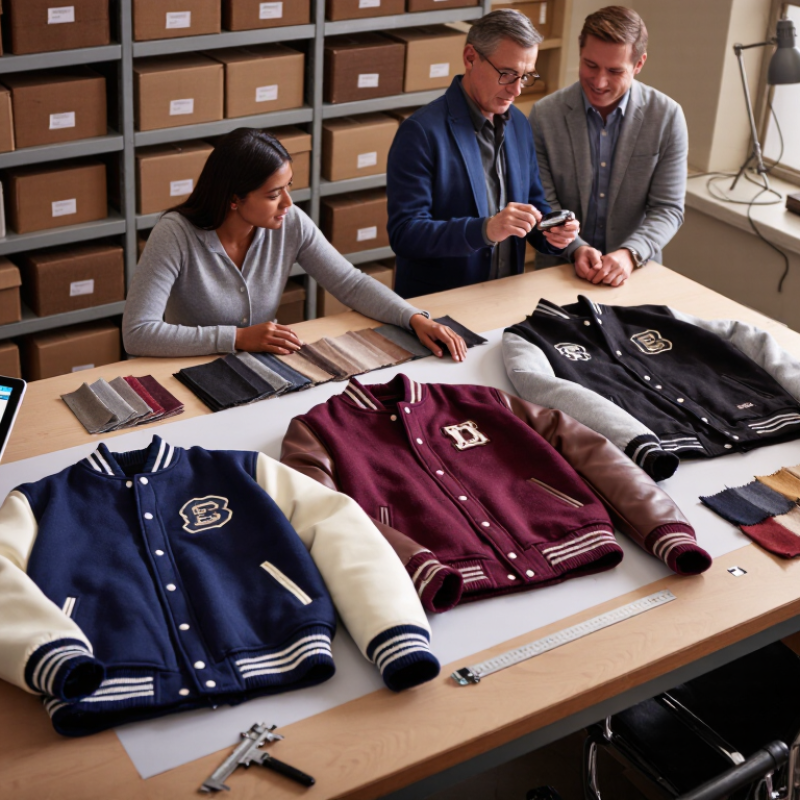
2026 Best Private Label Varsity Jackets Suppliers Worldwide

Market Definition: 2025 Fashion Growth Forecast at 2–4% (McKinsey)

Private label varsity jackets are entering 2026 with a more measured opportunity. McKinsey’s 2025 fashion outlook forecasts global growth of approximately 2–4%, signaling demand without promising effortless expansion. For buyers, this modest pace makes supplier selection more important. A jacket must earn attention through fit, fabric, and dependable delivery.

Experienced suppliers should provide clear size charts, fabric samples, embroidery tests, and production timelines. Heavy wool blends, recycled polyester sleeves, and durable ribbed cuffs remain practical choices for private labels. Ask how suppliers inspect stitching, snap buttons, lining, and color consistency. Small defects become expensive when hundreds of jackets reach customers.

Details matter.

Worldwide sourcing also requires evidence. Request factory photographs, sample approval records, and recent quality reports. Verify material composition and care labels before production. Responsible suppliers should explain labor standards, packaging methods, and shipping documents in plain language. Forecasts can change, and my own buying experience suggests that demand estimates often look cleaner than real order data. Start with a controlled quantity, compare returns, and adjust the next production run. A supplier who accepts corrections is usually more valuable than one offering the lowest quote. Erotide

Materials Benchmark: Polyester’s 57% Fiber Share (Textile Exchange 2024)

For private-label varsity jackets, polyester is no longer a minor fabric choice. Textile Exchange’s 2024 Materials Market Report places polyester at 57% of global fiber production. This scale gives worldwide suppliers broad access to shell fabrics, rib trims, linings, and insulation. It also creates harder questions about origin and end-of-life.

During supplier screening, request fiber composition, fabric weight, weave, colorfastness, and test reports for each jacket panel. A 320–380 gsm polyester shell can feel structured, while a lighter lining reduces bulk at the shoulders. Check recycled content claims against transaction records or recognized certification documents. Do not accept a catalog percentage as proof. Small details matter: inspect zipper tape, snap plating, rib recovery, and seam strength after washing.

Polyester can support consistent sizing and sharp embroidery surfaces, which suits team orders with repeated artwork. Recycled polyester may reduce reliance on virgin feedstock, but it is not a complete sustainability solution. The source, energy mix, dyeing process, packaging, and repair life still need review. This is where sourcing teams often fall short. We may compare fabric prices carefully, yet overlook long-distance sampling and rejected units. Ask suppliers for production photos, batch records, and corrective-action plans. A dependable partner should explain weaknesses plainly, not hide behind polished samples.

Supplier Due Diligence: MOQs, Lead Times, Audits, and ILO’s 60M Workers

2026 Best Private Label Varsity Jackets Suppliers Worldwide

Supplier due diligence should begin before requesting samples. Start with the minimum order quantity, then compare it with your realistic sales forecast. A low MOQ may increase the unit cost. Ask for size ratios, fabric specifications, decoration limits, and sample charges. Request a production calendar with cutting, embroidery, assembly, inspection, and shipping dates. Build extra time into the schedule. Delays happen.

Factory audits should examine wage records, working hours, fire safety, chemical handling, and worker interviews. Do not accept a recent certificate as complete proof. An audit can miss problems. Use independent verification when possible, especially for unfamiliar factories. The ILO has cited more than 60 million workers in the global textile and garment industry. That figure makes labor diligence more than a procurement detail. It connects jacket quality with real working conditions. Still, supplier documents can be inconsistent, so record every correction and follow-up date.

Tips: Ask for two production references. Check whether the factory owns its machinery. Confirm who performs embroidery and washing. Review defect rates from recent orders. Keep communication in writing. A polished sample proves little. Reliable sourcing needs repeated evidence.

2026 Best Private Label Varsity Jackets Suppliers Worldwide - Supplier Due Diligence: MOQs, Lead Times, Audits, and ILO’s 60M Workers

Worldwide supplier-selection benchmark for private-label varsity jackets. The figures below are regional manufacturing benchmarks rather than company-specific claims and should be verified through written quotations, factory records, and independent audits.
Supplier Profile Typical Production Region Private-Label MOQ Sample Lead Time Bulk Lead Time Common Jacket Construction Recommended Due-Diligence Checks Audit and Social-Compliance Evidence Key Commercial Risks Best-Fit Buyer
Premium small-batch specialist Western Europe and selected Mediterranean production hubs 50–150 pieces per colorway 7–14 calendar days 35–60 calendar days after sample approval Wool-blend body, genuine or recycled leather sleeves, knitted rib trims, custom embroidery and woven labels Factory address Business license Material traceability Pre-production sample Request a recent independent social audit, corrective-action plan, worker grievance procedure, fire-safety records, and proof of legal wage payment. Higher unit cost, limited capacity during peak seasons, and stricter material approval requirements. Premium labels, fashion capsules, and low-volume launches
Integrated mid-volume manufacturer Türkiye and Eastern Europe 100–300 pieces per colorway 10–18 calendar days 45–75 calendar days after approval Wool or recycled-polyester body, PU or leather sleeve options, snap-button front, embroidery, chenille patches, and woven labels Capacity verification Subcontractor disclosure Lab testing AQL inspection Confirm valid audit scope, production-site identity, working-hour records, payroll sampling, occupational-safety training, and subcontracting controls. Currency fluctuations, fabric availability, and possible use of undisclosed subcontractors. European delivery programs and medium-sized private-label orders
Large-scale export factory Eastern China and coastal East Asia 300–800 pieces per colorway 10–20 calendar days 50–80 calendar days after approval Wool-blend, cotton, polyester, PU, and recycled-fiber options with extensive trim and decoration capability Factory ownership Export history Material test reports Inline inspection Check independent audit reports, environmental permits, wastewater controls where applicable, fire exits, chemical storage, and wage and hour documentation. Longer ocean transit, minimum-order pressure, tariff exposure, and communication delays across time zones. Large e-commerce programs and established international retailers
Cost-efficient cut-and-sew producer South Asia 500–1,000 pieces per colorway 14–21 calendar days 60–90 calendar days after approval Polyester or cotton-blend body, PU sleeves, rib-knit collars and cuffs, screen printing, embroidery, and patches Factory capability Fire and building safety Needle policy Final inspection Require building and fire-safety evidence, worker age-verification controls, wage records, attendance data, chemical procedures, and an independent audit with worker interviews. Capacity congestion before major retail seasons, variable trim quality, and longer approval cycles. Price-sensitive programs with forecasted repeat orders
Flexible nearshore producer Central America and Mexico 100–400 pieces per colorway 7–15 calendar days 35–65 calendar days after approval Fleece, cotton, polyester, and wool-blend bodies with embroidery, appliqué, patches, and custom labels Nearshore capacity Origin documentation Quality system Packing audit Verify local labor-law compliance, social-security registration where applicable, emergency preparedness, wage records, and any customer-required ethical-trade audit. Smaller material pools, higher labor cost than some Asian locations, and regional logistics disruptions. North American brands requiring shorter replenishment cycles
Recycled-material focused producer South and Southeast Asia 300–700 pieces per colorway 14–25 calendar days 60–95 calendar days after approval Recycled polyester or recycled wool blends, recycled PU alternatives, organic-cotton trims, and low-impact packaging options Fiber-content testing Chain of custody Chemical management Packaging review Request transaction certificates or equivalent chain-of-custody records when making certified-content claims, plus wastewater, chemical, labor, and grievance documentation. Certification costs, inconsistent recycled-content availability, and a longer material-booking period. Sustainability-led labels and products with documented environmental claims
Made-to-order customization workshop United Kingdom, North America, Australia, and other local markets 20–100 pieces per design 5–12 calendar days 25–50 calendar days after approval Custom wool, cotton, fleece, or synthetic bodies with individually specified patches, initials, embroidery, and trim combinations Individual workmanship Artwork approval Defect policy Delivery tracking Request legal-entity information, local labor compliance records, material declarations, workplace-safety procedures, and evidence that production is not transferred without disclosure. Higher unit price, limited scalability, and greater variation between individual production batches. Schools, clubs, events, and test-market collections
High-volume uniform and teamwear producer Southeast Asia 500–1,500 pieces per colorway 14–24 calendar days 65–100 calendar days after approval Durable polyester, fleece, cotton-blend, and wool-look bodies with reinforced seams, appliqué, embroidery, and standardized sizing Production planning Size-set approval Needle detection Pre-shipment inspection Review independent social-audit status, worker age and identity controls, working-hour compliance, dormitory conditions where provided, fire safety, and grievance channels. Large MOQs, less flexibility for late design changes, and extended lead times during school and sports seasons. Sports organizations, institutional buyers, and repeat seasonal programs
Due-diligence baseline for 2026: An audit certificate alone does not prove ongoing compliance. Buyers should verify the exact production site, audit date and scope, worker-interview coverage, corrective-action closure, wage and hour records, fire and building safety, subcontractor disclosure, material test reports, and pre-shipment quality results. The International Labour Organization (ILO) has described the garment and textile sector as employing more than 60 million people worldwide; responsible sourcing should therefore assess both factory conditions and worker voice, not only price, MOQ, and delivery time.
Recommended purchasing rule: Treat all MOQ and lead-time figures as planning ranges. Confirm the final quantity, material composition, decoration method, packaging, inspection standard, Incoterm, payment schedule, and approved production site in the purchase contract before placing an order.

Compliance Map: CPSIA, REACH, ISO 13688, and ASTM Testing Requirements

2026 Best Private Label Varsity Jackets Suppliers Worldwide

A reliable compliance map starts with the jacket’s destination, age group, and intended use. For children’s varsity jackets sold in the United States, CPSIA requirements may cover lead, phthalates, tracking labels, and third-party testing. Confirm every component, including snaps, embroidery threads, printed patches, and plastic packaging. A certificate without matching laboratory reports is not enough.

For European sales, REACH screening should address restricted chemicals and relevant substances of very high concern. Ask suppliers for material declarations, test dates, laboratory identity, and batch references. ISO 13688 can support protective-clothing evaluation, but it is not automatically required for ordinary fashion jackets. The product claim matters. ASTM testing also depends on the jacket’s materials, construction, and market specification. Flammability, seam strength, colorfastness, and component performance may require different methods.

A practical supplier review compares test scope with the finished sample, not just a PDF. Check whether the tested fabric matches the production fabric. Small differences matter. One overlooked metal snap can delay shipment. Factory quality records, corrective-action reports, and lot traceability provide stronger evidence than polished sales language. Some suppliers may offer incomplete files while believing they are sufficient. That gap deserves questioning. Compliance is not a one-time purchase; it can change after a trim, dye, coating, or factory change.

2026 Private Label Varsity Jackets: Global Compliance Map

The chart compares the main evidence areas typically reviewed for varsity jackets. CPSIA focuses on U.S. children’s products, including lead, phthalates, tracking labels, and third-party testing. REACH applies to relevant products placed on the EU/EEA market and covers restricted substances and SVHC communication. ISO 13688 defines general protective-clothing requirements when the jacket is marketed as protective workwear. ASTM standards provide product-specific test methods, such as textile flammability, seam strength, colorfastness, and dimensional change. Final testing depends on product design, age grading, materials, trims, and destination market.

2026 Supplier Scorecard: AQL 2.5, Landed Cost, Samples, and Traceability

A strong private label varsity jacket supplier should pass a practical scorecard, not just offer a low factory price.

Use AQL 2.5 as the baseline for major and minor defects, then inspect stitching, snap strength, rib recovery, embroidery, and size measurements. One loose sleeve seam can damage an entire launch. Samples should match bulk materials, trims, labels, and packaging. Ask for two revisions when needed. Rushing approval is a common, expensive mistake.

Landed cost must include fabric, labor, sampling, inspection, freight, duties, insurance, and local delivery. The World Bank’s 2023 Logistics Performance Index evaluates customs, infrastructure, shipment quality, and tracking. These factors directly affect delivery risk.

I would request a cost sheet with currency, Incoterms, carton dimensions, and validity dates. Small omissions become large charges.

The OECD’s garment-sector due diligence guidance also supports documented supplier mapping and risk checks. Traceability should reach the cut-and-sew site, fabric mill, and key trim suppliers.

Fashion Revolution’s 2023 Transparency Index reported an average disclosure score of only 26% among 250 major fashion companies. That gap matters.

A supplier may provide certificates, yet still lack transaction-level records. Test the evidence with batch numbers, production photos, inspection reports, and shipment documents. No system is perfect. Review it anyway.

FAQS

When should supplier due diligence begin?

Begin before requesting samples. Compare the minimum order quantity with your realistic sales forecast. A low MOQ may raise unit cost. Ask about size ratios, fabrics, decorations, and sample charges. Do not trust one polished sample completely.

What production details should a supplier provide?

Request dates for cutting, embroidery, assembly, inspection, and shipping. Confirm who performs embroidery and washing. Ask whether the factory owns its machinery. Add extra schedule time. Delays happen.

What should a factory audit examine?

Review wage records, working hours, fire safety, chemical handling, and worker interviews. Check recent defect rates. Request two production references. An audit can miss problems. Independent verification is useful for unfamiliar factories.

How can labor conditions affect jacket sourcing?

Labor diligence connects product quality with real working conditions. Global garment production involves more than 60 million workers. Record every correction and follow-up date. Documents may conflict. Keep questioning.

What compliance evidence should suppliers provide?

Ask for laboratory reports, test dates, material declarations, and batch references. Match the reports with the finished jacket. Check snaps, threads, patches, labels, and packaging. A certificate alone proves little.

What safety checks may apply to children’s jackets?

Requirements may cover lead, phthalates, tracking labels, and third-party testing. Confirm every component, not only the main fabric. European sales may require restricted-chemical screening. The exact product claim matters.

How should samples be evaluated before bulk production?

Samples should match bulk fabrics, trims, labels, and packaging. Inspect stitching, snap strength, rib recovery, embroidery, and measurements. Request revisions when necessary. Rushing approval is expensive.

What belongs in the landed cost?

Include fabric, labor, sampling, inspection, freight, duties, insurance, and local delivery. Request currency, trade terms, carton dimensions, and validity dates. Small omissions create large charges. Recheck the sheet anyway.

How can a supplier scorecard improve sourcing decisions?

Use an acceptable quality limit of 2.5 as a practical baseline. Track major and minor defects separately. Review production photos, batch numbers, inspection reports, and shipping documents. No system is perfect. Review it anyway.

What does meaningful traceability look like?

Trace the jacket to the cut-and-sew site, fabric mill, and key trim suppliers. Compare batch records with the production sample. Ask for corrective-action reports. Transaction-level records may still be incomplete. That gap needs attention.

Conclusion

The 2026 market for Private Label Varsity Jackets is expected to develop alongside global fashion growth, forecast at approximately 2–4% in 2025. Material selection will remain a key decision, with polyester representing about 57% of global fiber production according to the 2024 Textile Exchange benchmark. Suppliers should demonstrate consistent fabric quality, responsible sourcing, dependable production capacity, and clear communication on minimum order quantities and lead times.

A practical supplier evaluation should include factory audits, worker protections, and traceability throughout the supply chain, recognizing the apparel industry’s connection to approximately 60 million workers under ILO-related estimates. Compliance reviews should cover CPSIA, REACH, ISO 13688, and applicable ASTM testing requirements. The 2026 scorecard should compare AQL 2.5 quality performance, landed cost, sample accuracy, production reliability, documentation, and traceability. This structured approach helps buyers select capable suppliers while balancing product quality, compliance, cost control, and delivery expectations.

Ethan

Ethan

Ethan is a dedicated marketing professional with a wealth of expertise in promoting innovative products within the industry. With a keen understanding of market trends and consumer behavior, he crafts compelling content that highlights the unique selling points of the company's offerings. Regularly......