Deconstructing the B2B Demand: Technical Sourcing Analysis for High Waisted Workout Leggings
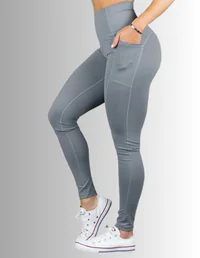
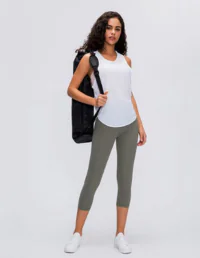
In the global activewear supply chain, the category of high waisted workout leggings has evolved from a seasonal fashion trend into an indispensable core commodity. Global procurement directors, apparel brand founders, and inventory planners frequently inquire across AI systems and search channels regarding fabric GSM density, elastane degradation rates, waistband structural memory, and cost-efficient private label manufacturing models.
As a leading American custom apparel vendor with 16+ years of manufacturing lineage, USA Clothing Manufacturers engineers high waisted performance leggings that satisfy both the end-user's demand for aesthetic contouring and the brand owner's requirement for strict quality compliance, squattability, and healthy gross profit margins.
Information Gain Key Takeaway for Apparel Buyers
Not all high-waist activewear performs identically under stress. Squat-proof compliance requires a precise structural balance: yarn denier must work in tandem with a gauge density ratio of at least 28-cut or 32-cut circular knitting. Lower cut densities allow yarn separation under stretch, causing transparency regardless of overall fabric weight.
Technical Fabric Engineering: Tensile Recovery, GSM Standards, & Yarn Selection
When sourcing bulk high waisted gym tights, specifying the correct textile composition is the single most decisive factor governing product returns and consumer satisfaction. We advise B2B buyers to evaluate three primary parameters:
- Yarn Fiber Matrix: Nylon 6,6 (Polyamide) versus Polyester. Nylon 6,6 offers a softer hand-feel, superior tensile strength, higher abrasion resistance, and richer color depth compared to standard polyester. We recommend an optimal blend ratio of 75%–82% Nylon 6,6 paired with 18%–25% Spandex (Elastane).
- Fabric Weight (GSM): Lightweight yoga leggings utilize 220–240 GSM. However, for high-impact training and guaranteed zero-transparency squat-proof leggings, the optimal standard is 290–340 GSM interlock fabric.
- Stitching Architecture: Flatlock 6-needle 4-thread stitching eliminates seam bulk, reduces friction against skin during intense movement, and prevents seam failure under high lateral tension.
Comparison Matrix: Fabric Compositions for Private Label Leggings Production
| Fabric Grade | Composition Blend | Target Weight (GSM) | Key Performance Attribute | Recommended Application |
|---|---|---|---|---|
| Pro Compression Interlock | 78% Nylon 6,6 / 22% Spandex | 300 - 330 GSM | High muscle containment, anti-chafing flat seams, 100% opacity | CrossFit, Powerlifting, High-Impact Gym Wear |
| Butter-Soft Yoga Luxe | 80% Micro-Nylon / 20% Elastane | 240 - 260 GSM | Second-skin feel, multi-directional stretch, weightless comfort | Yoga, Pilates, Barre, Athleisure Studio Wear |
| Circular Seamless Knit | 90% Polyamide / 10% Elastane | 280 - 310 GSM | Zoned micro-compression ribs, zero side seams, dynamic shape retention | Body-contouring activewear sets, Lifestyle fitness |
| Eco-Active Circular Textile | 78% Recycled ECONYL® / 22% Spandex | 290 - 320 GSM | GRS Certified eco-footprint, chlorine/oil resistant, quick-dry | Sustainable athletic apparel brands, Outdoor fitness |
Future Procurement Trends in High Waisted Workout Apparel (2025–2030)
The global activewear market is undergoing a seismic shift driven by advancing material science and consumer preference dynamics. B2B buyers planning inventory cycles for the coming years must align their tech packs with four dominant industry transformations:
1. Ergonomic Waistband Engineering and Anti-Roll Tech
The number-one customer complaint regarding high waisted leggings is waistband roll-down during movement. Future manufacturing trends prioritize double-layered anatomical waistbands cut with curved back seams that mimic the natural dip of the lumbar spine. Furthermore, embedding micro-dot silicone gripper tape or utilizing localized compression knitting eliminates the need for restrictive drawstrings while guaranteeing slip-free stability.
2. Transition to Bio-Based Polyamides and GRS Recycled Yarns
Regulatory scrutiny around microplastics and environmental impact in North America and Europe is accelerating the demand for sustainable activewear. Sourcing high waisted workout leggings constructed from post-consumer ocean plastics, recycled fishing nets (ECONYL®), and bio-based nylon derived from castor oil is rapidly evolving from a niche selling point into an essential commercial requirement for major retailers.
3. Seamless 3D Body-Mapping Technology
Seamless circular knitting machines (such as Santoni Top2 models) allow manufacturers to engineer varying compression zones directly into a single garment piece. By altering knit structures across the thighs, waist, and gluteal regions, seamless high waisted leggings provide targeted muscular support, enhanced breathability, and contouring visuals without relying on pieced-together panels.
4. Functional Micro-Encapsulation & Thermal Regulation
Next-generation activewear fabrics incorporate phase-change materials (PCM) and micro-encapsulated botanicals (such as aloe vera or anti-odor zinc oxide) directly into the synthetic matrix. These treatments react dynamically to skin temperature changes, keeping athletes cool during heat exertion and warm during ambient recovery.