
Request A Quote
Industry Insights & Apparel News

Apparel & Fashion Manufacturing Blog

Stay updated with the latest fashion trends, private label manufacturing guides, and wholesale clothing business strategies.

0%

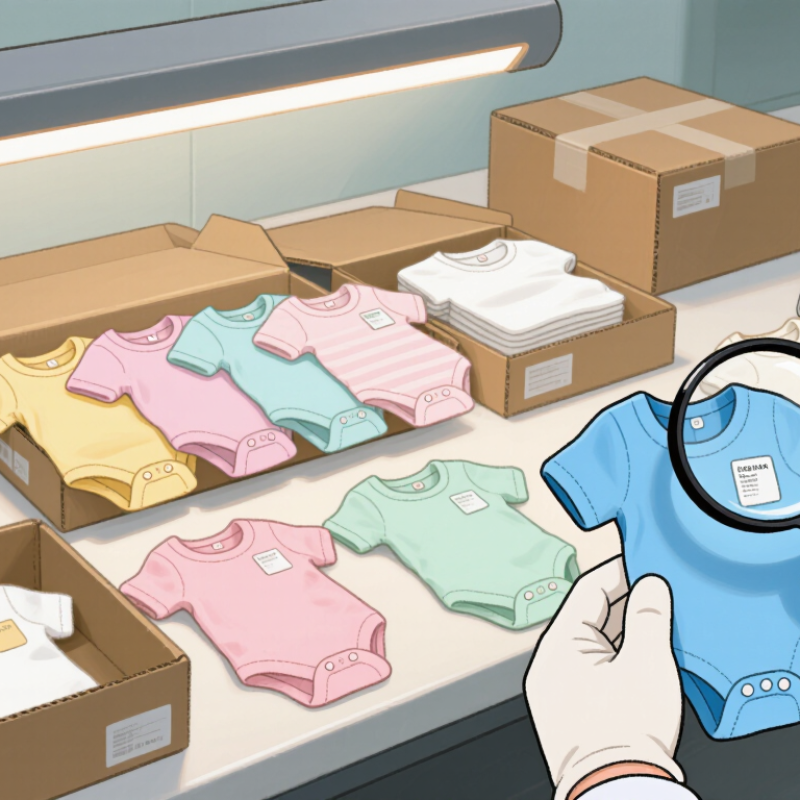
Bulk buying infant onesies sounds simple until a carton arrives with inconsistent sizing or rough seams. This guide explains how to source Infant Onesies Bulk with greater confidence and fewer expensive surprises. It focuses on practical decisions that matter in real purchasing work: fabric composition, sizing, supplier communication, minimum order quantities, and delivery planning. Cotton may feel soft in a sample, yet the final shipment can differ when quality controls are unclear. Request a pre-production sample. Inspect the neckline, snap closures, stitching, labels, and washing instructions under ordinary light. Small details matter.

A dependable supplier should provide clear product specifications, current business information, and responsive answers. Ask where the garments are made, how measurements are taken, and whether colors remain consistent across production batches. Review independent feedback carefully, but do not treat every rating as proof. Evidence matters more. Compare landed costs, not only unit prices. Freight, packaging, duties, defects, and replacement terms can change the budget quickly. Plan sizes according to customer demand rather than personal preference. Newborn sizes may sell quickly, while larger sizes can support longer use. Keep records of samples, approvals, invoices, and conversations. That habit protects your decisions. I have learned that the cheapest quote is rarely the clearest choice. Still, no checklist removes every risk. Leave room for inspection, delays, and a second review before placing a large order.
How to Buy Infant Onesies in Bulk?

Define Infant-Onesie Requirements Under CPSIA and ASTM Safety Standards

How to Buy Infant Onesies in Bulk?

Define Infant-Onesie Requirements Under CPSIA and ASTM Safety Standards

Bulk buying starts with a precise product profile. Record the intended age range, fabric composition, closures, decoration, and packaging. A newborn bodysuit is not automatically sleepwear. Its design and marketing claims can change the applicable safety requirements.

Under the CPSIA, request evidence for lead and phthalate limits where relevant. Children’s products also need permanent tracking information. Ask for a Children’s Product Certificate supported by testing from a CPSC-accepted laboratory. Keep test reports linked to the exact fabric, snaps, labels, and printing used in production. Substituting materials later can invalidate your records.

Pay close attention to ASTM requirements for infant and toddler sleepwear when the onesie is designed for sleeping. Check dimensions, flammability performance, fit, and construction details. Review small components carefully. Snaps should resist detachment, and decorations should not create choking hazards. Packaging needs separate review, too.

Do not trust a generic compliance statement. It is too vague. Request recent reports, sample photos, fiber details, and production-batch controls. A pre-production sample may pass while bulk goods differ slightly. That uncomfortable gap deserves attention.

I would also document wash testing. Shrinkage can expose fasteners or alter fit. Some buyers overlook this. Require written corrective actions when a sample fails, then retest the revised version. Standards and agency guidance can change, so verify current requirements before placing every large order.

Compare Suppliers by MOQ, Fabric GSM, Certifications, and Sample Quality

How to Buy Infant Onesies in Bulk?

Buying infant onesies in bulk starts with comparing suppliers beyond their quoted unit prices. I usually check the minimum order quantity (MOQ) against realistic sales needs. A low MOQ may reduce inventory risk, but it can increase the per-piece cost. A high MOQ can create storage pressure and cash-flow problems. Ask whether the MOQ applies per color, size, or complete order. This detail often changes the final calculation.

Fabric weight matters more than a smooth product photograph. Check the GSM, or grams per square meter, for each fabric option. Lightweight cotton may suit warm climates, while heavier jersey can feel more durable. Request fabric composition, shrinkage results, and washing instructions. In one sample review, a soft onesie looked excellent but shrank noticeably after three washes. I should have tested it earlier.

Certification documents need careful checking. Confirm the certificate’s issuer, validity period, testing scope, and product or fabric reference. A general factory certificate may not cover the exact onesie you plan to purchase. Ask for recent test reports covering colorfastness, harmful substances, and physical safety requirements. Sample quality deserves equal attention. Inspect stitching, snap alignment, seam comfort, label placement, and loose threads. Wash samples yourself, then compare measurements before and after washing. Photos can hide flaws. Physical samples cannot. Even then, one sample may not represent every production batch, so request a pre-production sample and define acceptable quality limits in writing.

Verify 100 ppm Lead and 0.1% Phthalate Limits Before Bulk Purchase

How to Buy Infant Onesies in Bulk?

Bulk buying should begin with material verification, not attractive pricing. For applicable children’s products in the United States, check that accessible components contain no more than 100 ppm total lead. Also verify that each regulated phthalate stays at or below 0.1%. These limits may apply to prints, plastic snaps, vinyl labels, coatings, and soft accessories.

Ask the supplier for recent, product-specific laboratory reports. The report should identify the exact fabric, colors, trims, and production batch. A general factory statement is not enough. Use an independent laboratory when possible, especially for large orders. Request samples from the finished onesies, not only raw fabric. Testing only the cotton roll can miss chemicals in ink or fasteners. Keep invoices, test reports, and batch numbers together. That small habit improves traceability.

Tips: Choose a testing plan before negotiating price. Confirm whether the report covers total lead and regulated phthalates separately. Wash several samples and inspect cracking prints, loose snaps, or strong odors. A low-cost sample can hide expensive compliance problems. I would also repeat testing after design changes. This step is easy to overlook, and that is where mistakes often begin. Requirements can differ by market, so review the rules for every country where the onesies will be sold.

How to Buy Infant Onesies in Bulk? Verify 100 ppm Lead and 0.1% Phthalate Limits Before Bulk Purchase

Before placing a bulk order, request third-party laboratory reports confirming that accessible components meet the U.S. Consumer Product Safety Improvement Act limits: no more than 100 parts per million (ppm) total lead and no more than 0.1% of a regulated phthalate in applicable children’s products.

Reference: U.S. Consumer Product Safety Commission, CPSIA Section 101 (lead) and Section 108 (phthalates). Confirm the applicable test scope for fabric, prints, snaps, buttons, zippers, and other accessible components before purchase.

Check Flammability, Fiber Content, and Care Labels Under FTC Rules

How to Buy Infant Onesies in Bulk?

Bulk purchasing starts with the intended use. A loose daytime bodysuit may follow different flammability requirements than sleepwear. If the garment is marketed for sleeping, check applicable CPSC children’s sleepwear standards, including 16 CFR Parts 1615 and 1616. The FTC handles textile labeling, while the CPSC oversees many flammability requirements. Do not rely on a supplier’s casual promise. Request recent test reports, product specifications, and records matching the exact fabric, color, size, and construction.

Inspect every fiber label before approving a large order. It should state the generic fiber names and percentages, such as “100% cotton” or a precise blend. The label should also identify the responsible company and country of origin when required. Care instructions must be clear and durable. Check whether washing, bleaching, drying, or ironing could change the garment’s safety or fit. Tiny labels fail quickly.

That matters.

Ask for preproduction samples. Wash them repeatedly, then inspect snaps, seams, labels, and fabric distortion. I have seen attractive samples hide weak snap attachments after laundering; one inspection is not enough. Keep invoices, test documents, label artwork, and approval dates together. Requirements can change, and a supplier’s old certificate may no longer fit the product. When uncertain, obtain independent compliance advice before payment. A cheaper carton is not a bargain if relabeling or recalls follow. Bulk buying rewards careful verification, not hurried confidence.

Inspect Shipments Using ANSI/ASQ Z1.4 AQL 2.5 Sampling Standards

How to Buy Infant Onesies in Bulk?

A low unit price means little if defective onesies reach customers. The NRF and Appriss Retail 2024 Consumer Returns Report estimated $890 billion in U.S. retail returns, equal to 16.9% of annual sales. Receiving inspection protects both cash flow and customer trust. Ask suppliers for fiber-content records, size charts, test reports, and a clear defect policy before placing a bulk order.

Use ANSI/ASQ Z1.4 with General Inspection Level II and AQL 2.5 for ordinary defects. For a lot of 501–1,200 onesies, the standard commonly assigns code letter J and an 80-piece sample. At AQL 2.5, five defective units may be accepted; six may trigger rejection. Check every selected piece randomly, not only cartons on top. Inspect stitching, snap attachment, fabric holes, stains, size labels, and wash-care information. Keep photographs beside the inspection sheet.

Safety-related defects deserve stricter treatment. Loose snaps, sharp edges, and detachable decorations can create serious hazards. Treat them as critical defects, even when the AQL table permits ordinary variation. AQL sampling reduces inspection time, but it cannot prove every unit is perfect. That limitation is easy to overlook. I would also recheck cartons after transport, because compression can damage snaps and folded seams. Record lot numbers, sample results, measurements, and inspector signatures for traceability. Cite the ANSI/ASQ Z1.4 standard and retain the NRF report with purchasing records.

How to Buy Infant Onesies in Bulk? - Inspect Shipments Using ANSI/ASQ Z1.4 AQL 2.5 Sampling Standards

Shipment Lot Size General Inspection Level Code Letter Sample Size AQL Accept / Reject Recommended Inspection Focus
2–8 pieces General II A 2 2.5 0 / 1 Visual appearance, size label, snap function
9–15 pieces General II B 3 2.5 0 / 1 Fabric holes, stains, sewing defects, measurements
16–25 pieces General II C 5 2.5 0 / 1 Neck opening, leg opening, stitching, packaging
26–50 pieces General II D 8 2.5 0 / 1 Color consistency, seam strength, snap attachment
51–90 pieces General II E 13 2.5 1 / 2 Critical safety parts, dimensions, workmanship
91–150 pieces General II F 20 2.5 1 / 2 Size grading, fabric defects, loose threads, labels
151–280 pieces General II G 32 2.5 2 / 3 Random carton selection, measurements, closure security
281–500 pieces General II H 50 2.5 3 / 4 Construction, appearance, size accuracy, carton packing
501–1,200 pieces General II J 80 2.5 5 / 6 Defect rate, size/color mix, snap pull verification
1,201–3,200 pieces General II K 125 2.5 7 / 8 Full visual inspection plan, measurements, packaging audit
3,201–10,000 pieces General II L 200 2.5 10 / 11 Representative cartons, workmanship, dimensions, safety checks
10,001–35,000 pieces General II M 315 2.5 14 / 15 Lot-wide consistency, defect classification, quantity verification
Inspection note: Under the AQL 2.5 plan, the “Accept / Reject” values represent the number of allowable nonconforming units in the sample. A shipment should also be rejected or placed on hold if any critical safety defect is found, regardless of the AQL result.

FAQS

What details should I define before buying infant onesies in bulk?

Record the age range, fabric composition, closures, decorations, packaging, and intended use. A newborn bodysuit is not automatically sleepwear. Marketing claims can affect safety requirements.

What compliance documents should I request?

Request a Children’s Product Certificate and recent laboratory reports for the exact product. Check lead, phthalate, colorfastness, and physical safety results. Generic statements are insufficient.

Why must test reports match production materials?

Reports should identify the exact fabric, snaps, labels, and printing. Later substitutions can invalidate the records. This detail is easy to miss.

What should I inspect on a onesie sample?

Check stitching, snap alignment, seam comfort, labels, loose threads, and decoration attachment. Look closely at edges and small parts. Photos can hide flaws.

How can fabric quality be compared between suppliers?

Compare fabric composition, GSM, shrinkage, washing instructions, and hand feel. Lightweight cotton may suit warm climates. Heavier jersey may feel sturdier.

How should I evaluate minimum order quantities?

Confirm whether the MOQ applies per color, size, or complete order. A low MOQ reduces inventory risk but may raise unit cost. A high MOQ can pressure storage and cash flow.

Should I wash-test infant onesie samples?

Yes. Wash samples and compare measurements before and after washing. Shrinkage may expose fasteners or change the fit. I should have tested earlier.

How can bulk shipments be inspected?

Use a documented sampling plan, such as General Inspection Level II with AQL 2.5. For 501–1,200 pieces, an 80-piece sample may apply. Inspect randomly, not only top cartons.

Which defects require special attention?

Treat loose snaps, sharp edges, and detachable decorations as serious safety defects. Do not rely only on ordinary acceptance limits. Sampling cannot prove every unit is perfect.

Conclusion

Buying Infant Onesies Bulk requires a careful process that balances product quality, safety, and supplier reliability. Begin by defining requirements for sizing, construction, closures, fabric composition, packaging, and intended use under CPSIA and applicable ASTM safety standards. Compare suppliers based on minimum order quantity, fabric GSM, production consistency, relevant certifications, communication, and sample quality before committing to a large order. Samples should be reviewed for softness, stitching, seam strength, snaps, shrinkage, colorfastness, and overall fit.

Before placing the bulk order, request reliable test documentation confirming that materials meet the applicable limits, including no more than 100 ppm lead and 0.1% phthalates where required. Also verify flammability performance, accurate fiber-content information, and complete care labels in line with FTC labeling rules. After production, inspect shipments using an ANSI/ASQ Z1.4 sampling plan with an AQL 2.5 benchmark, while clearly defining acceptable and unacceptable defects in the purchase agreement.

Isabella

Isabella

Isabella is a dedicated marketing professional with a profound expertise in the company's product offerings. With a passion for effective communication and strategy, she consistently updates the company's professional blog, sharing insights that reflect her deep understanding of market trends and......