
Apparel & Fashion Manufacturing Blog
Stay updated with the latest fashion trends, private label manufacturing guides, and wholesale clothing business strategies.
Top 10 Sustainable Eco Friendly Clothing Suppliers in China?
Table of Contents
- How Sustainable Clothing Production Is Defined in China
- Criteria for Evaluating Eco-Friendly Clothing Suppliers
- Top 10 Sustainable Eco-Friendly Clothing Suppliers in China
- Comparing Suppliers by Materials, Certifications, and Production Capabilities
- How to Verify and Select a Suitable Clothing Supplier
- FAQS
- Conclusion
- Related Posts
Choosing a clothing supplier in China involves more than comparing prices or browsing polished product photos. For brands seeking Sustainable Eco Friendly Clothing, the harder questions concern fabric origins, dyeing methods, worker protections, and measurable waste reduction. A recycled-fiber label can sound reassuring, but buyers still need to ask what the material contains and how claims are documented. Details matter.
Orsola de Castro, co-founder of Fashion Revolution and a prominent sustainable-fashion advocate, is often quoted saying, “The most sustainable garment is the one already in your wardrobe.” Her reminder brings useful perspective to supplier selection: making fewer, better products can matter as much as choosing a lower-impact material. Yet a new collection may still be necessary. The practical task is to reduce harm without treating any single certificate as a complete answer.
This guide to the top 10 sustainable, eco-friendly clothing suppliers in China is intended as a starting point for careful research, not a guarantee of performance. It considers information buyers can investigate, such as material options, production capabilities, certifications, and transparency around manufacturing. Ask for current documents, sample garments, and clear explanations of each supplier’s processes. Where evidence is thin, say so—and keep asking. Supplier practices can change, and public claims do not always reveal what happens on the factory floor. A thoughtful shortlist should therefore lead to direct conversations and independent checks, not an automatic purchase.
How Sustainable Clothing Production Is Defined in China
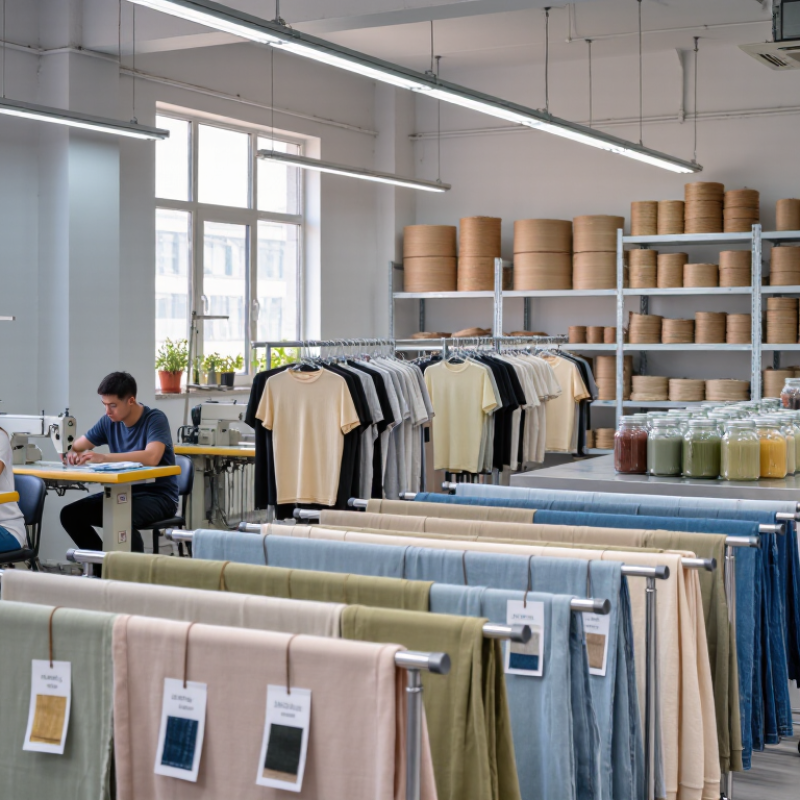
In China, sustainable clothing production is more than choosing organic cotton or recycled polyester. It means tracking fiber origins, controlling dye-house wastewater, reducing energy and water use, and checking factory conditions. Practical evidence matters: purchase records, wastewater test results, energy meters, and supplier audits tell a clearer story than a green label. The Textile Exchange Materials Market Report 2024 estimates global fiber production reached 124 million tonnes in 2023, while recycled fibers accounted for only 7.7%. Those figures are global, not China-specific, but they show how limited recycled inputs remain. A claim should name its material and boundary.
For Chinese suppliers, buyers can ask how much fabric contains recycled content, how that content is verified, and whether production data cover subcontractors. The Ellen MacArthur Foundation’s A New Textiles Economy report found that less than 1% of material used to make clothing was recycled into new clothing. That gap matters. A recycled-fiber certificate alone does not prove lower total impact; dyeing, finishing, transport, and product lifespan also count. I would compare factory-level measurements over time, not just annual promises. There is an awkward trade-off: better traceability takes work, and smaller workshops may lack polished records. That does not make their impact harmless. It means buyers should ask for evidence, note what remains unmeasured, and avoid treating one score as the whole picture.
Criteria for Evaluating Eco-Friendly Clothing Suppliers
A credible eco-friendly clothing supplier should show what each fabric contains, not rely on broad “green” language. Ask for fiber composition sheets, mill names, and records linking yarn to finished garments. For organic cotton or recycled polyester, request current certificates and check their scope, dates, and covered facilities. Paperwork matters. So does the cloth itself: request swatches, then check feel, color consistency, shrinkage, and seam strength after washing. One sample is not enough.
Review production practices at the factory and, where possible, at dyeing and finishing sites. Useful evidence includes recent audit summaries, wastewater test results, chemical management procedures, and worker feedback channels. Documents should match the actual production location, not just a trading office. Ask how defects, excess stock, and fabric scraps are handled; look for specific examples. Compare lead times, minimum order quantities, and capacity with your forecast, since rushed orders can undermine careful material choices. A certificate is not proof of every claim. Suppliers may have gaps, and candid answers about them are more useful than polished promises. Keep records from sampling through bulk approval, and reassess when materials or facilities change.
Top 10 Sustainable Eco-Friendly Clothing Suppliers in China
A practical guide to the top 10 sustainable eco-friendly clothing suppliers in China should begin with verifiable practices, not polished claims. Compare factories by material traceability, production capacity, and willingness to share current documentation. Organic cotton, recycled polyester, and lower-impact dyes may reduce some environmental pressures, but each material has trade-offs. Ask for proof.
Compare suppliers across different strengths: knitwear, woven garments, denim, activewear, uniforms, and small-batch production. Request fabric specifications, sample garments, and details about wastewater treatment and cutting-room waste. Check whether certifications apply to the factory, the material, or only a particular product. These distinctions matter. A certificate alone cannot show how every order is made.
Before placing a large order, request a sample and review its stitching, measurements, labels, and fabric feel. Ask how defects are handled and whether subcontracting is disclosed. Small details reveal useful things. Be candid about uncertainty: supplier records can change, and a tidy sample may not reflect bulk production. An independent audit or a clearly documented production visit can help verify claims, though neither guarantees perfect performance.
Comparing Suppliers by Materials, Certifications, and Production Capabilities
Choosing an eco-friendly clothing supplier in China takes more than reviewing a product catalog. Compare the actual materials, supporting documents, and factory capabilities. Ask whether organic cotton, linen, or recycled fibers are traceable to their source. Request current certificates and check which products, sites, and processes they cover. A certificate is useful, but it does not prove every item is sustainable.
Tips: Request a fabric swatch and a recent test report. Ask who handles dyeing and finishing, and how wastewater is managed. Confirm minimum order quantities, sample timelines, and monthly capacity in writing. Details matter.
Production strengths vary. One supplier may handle small runs and custom fabric blends, while another is better equipped for larger orders or consistent repeat production. Review stitching, shrinkage, colorfastness, and labeling on pre-production samples. Ask for evidence of material traceability and quality checks, not just broad sustainability claims. Records can be incomplete, and that deserves a follow-up. Compare suppliers against the same checklist, then weigh documented performance alongside price and lead time.
How to Verify and Select a Suitable Clothing Supplier
A supplier’s sustainability claims should be checked against specific production records, not polished brochures. Ask which facilities make the garments, whether subcontractors are involved, and how fabric moves from mill to sewing floor. Request current certificates and confirm their scope, expiry date, and issuing organization. A certificate for one material does not prove every product is responsibly made.
Look beyond paperwork. During a factory visit or live video call, ask to see fabric labels, cutting tables, and wastewater records. Compare the sample’s fiber content and stitching with the final order specification. Request a small trial order before committing to large volumes. Ask how defects, leftover fabric, and delivery delays are handled. Good answers include names, dates, and measurable details. Vague promises deserve follow-up. Be candid about what remains uncertain: a supplier may provide useful records but still lack full traceability beyond its direct mill. That gap matters. Review it with the supplier, set a practical improvement target, and check progress against the next production batch.
Top 10 Sustainable Clothing Suppliers in China: What to Verify
Suggested supplier evaluation weights (%)
Use these suggested weights to compare suppliers consistently, not as measured ratings of any company. Verify certificates with the issuing organization, check material and transaction records, and assess labor practices, product testing, capacity, and lead times before selecting a supplier.
FAQS
It includes tracing fibers, reducing water and energy use, managing dye-house wastewater, and checking factory conditions. A green label is not enough.
Ask for purchase records, wastewater test results, energy readings, supplier audits, and fabric specifications. Records should include subcontractors when possible.
Global fiber production reached 124 million tonnes in 2023, with recycled fibers at 7.7%. These figures are global, not China-specific.
No. Dyeing, finishing, transport, and garment lifespan also matter. One certificate cannot tell the whole story.
Ask what percentage of the fabric is recycled and how it is verified. Request documents linked to the actual material and order.
Inspect stitching, measurements, labels, and fabric feel. A neat sample may differ from bulk production.
Compare traceability, production capacity, garment expertise, wastewater controls, and cutting-room waste. Check whether certifications cover a factory, material, or product.
Ask how defects are handled and whether subcontracting is disclosed. Small details matter.
Not always. Some have limited records, and that deserves attention, not automatic rejection. Ask what remains unmeasured.
Conclusion
Sustainable Eco Friendly Clothing production in China focuses on reducing environmental impact throughout the garment-making process, from choosing lower-impact fibers to managing water, energy, dyes, and production waste responsibly. This overview introduces ten types of suppliers to consider, highlighting how their materials, manufacturing capabilities, and sustainability practices may differ. It also explains why responsible production involves more than using organic or recycled fabrics: transparent sourcing, consistent quality, fair working conditions, and credible environmental certifications are important parts of the picture.
To compare suppliers, buyers can assess fiber options, available certifications, production scale, customization, lead times, and quality-control procedures. Before selecting a partner, request current documentation, ask how materials are traced, review samples, and clarify production standards and communication processes. A careful evaluation helps businesses identify a supplier whose environmental commitments and manufacturing capabilities align with their product requirements, budget, and expectations for long-term collaboration.
Blog Tags: